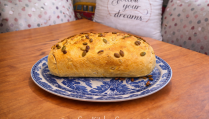









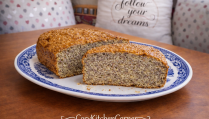




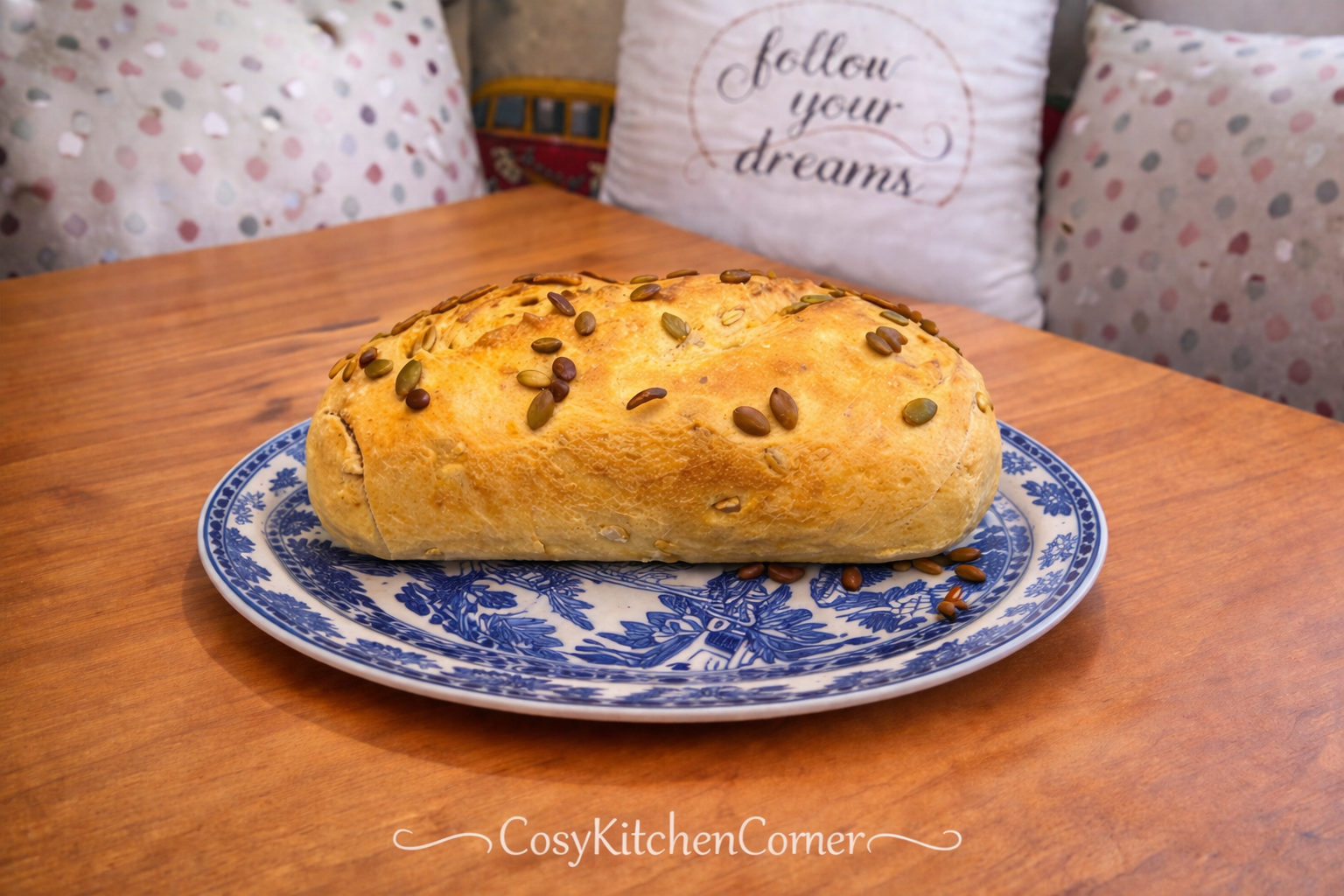
Pumpkin Seed Bread
A loaf full of warmth, memories & mischief.
Bread days in Lely’s kitchen were never rushed. The dough would sit quietly under a tea towel, the radio low in the background, and everything seemed to slow down around it. She worked by feel more than time, always saying the dough would tell you when it was ready if you paid attention.
My grandfather had his own role in the process – hovering nearby, casually helping himself to the pumpkin seeds as if no one would notice. Lely always noticed. She never said a word, just adjusted as she went, adding a little more, as she did with everything in life.
Looking back, it was never just about the bread. It was about patience, small habits, and the quiet understanding between them. Even now, every time make this loaf, it feels like stepping back into that kitchen – calm, steady, and full of life in the simplest way.
Ingredients
To grease the tin.
Vegetable oil.
For the dough
300 g strong white bread flour
1 tsp salt
A sachet or 7g fast-action dried yeast (25g fresh yeast)
60 g pumpkin seeds, roughly chopped and lightly toasted
50 g pumpkin purée - weigh out pumpkin and microwave it, then mash to a pulp.
170 ml warm water
To top.
40 g pumpkin seeds, roughly chopped Don’t toast these as they will roast as you bake bread.(Hide these well… or accept that some may mysteriously disappear)
Instructions
1
Start by lightly oiling your loaf tin, then line it with a strip of baking paper so the bread can be lifted out easily once baked.
2
Place the flour into a large bowl or the bowl of your stand mixer, and add the salt, yeast and chopped pumpkin seeds. Mix everything together so the ingredients are evenly distributed.
3
Spoon in the pumpkin purée and pour in most of the warm water. Gently bring everything together. Add the remaining water a little at a time only if needed. The dough should come together cleanly without any loose flour left in the bowl. It’s ok if it’s a bit sticky at this point.
4
Turn the dough out onto a lightly floured work surface and knead it for around eight minutes. If you are mixing this in a stand mixer, knead for some 4 to 5 Mins. As you work it, the dough will become smooth, elastic and easier to handle.
5
To test if it’s ready, shape it into a ball and gently press it with your fingertips. If it springs back quickly, it has been kneaded enough. If not knead for a little longer.
6
Lightly oil the bowl and place the dough back inside. Cover and leave it somewhere warm until it has doubled in size, which usually takes about an hour.
7
Once risen, transfer the dough onto a lightly floured surface and gently press it down to remove any large air pockets. Shape it loosely into an oval.
Fold one end of the dough into the centre, then repeat with the opposite end. Turn it around and roll it up from the top, pressing gently as you go, to form a neat loaf shape. Pinch the seam underneath to seal.
8
Scatter the extra pumpkin seeds onto a tray and roll the loaf over them so the top and ends are well coated, leaving the underside clear.
Place the loaf into the prepared tin with the seam underneath. Cover and allow it to rise again until noticeably puffy and doubled in size. About another hour. When gently pressed, the dough should hold its shape rather than springing back.
9
While the loaf is finishing its second rise, place a deep roasting tray on the bottom shelf of the oven and heat the oven to 240°C (220°C fan).
10
Just before baking, make a few diagonal cuts across the top of the loaf to help it expand evenly in the oven.
11
Place the tin in the centre of the oven. Carefully pour a cup of water into the hot tray at the bottom to create steam, then close the door and immediately reduce the temperature to 220°C (200°C fan).
12
Bake for around 35 minutes, until the crust is golden and the loaf sounds hollow when tapped underneath. It you feel it’s browning too much, cover with a foil lid after the 20 min mark.
13
Remove from the tin and leave to cool completely (or for an hour if you can’t wait) on a wire rack before slicing.